
Why Won't My Dog Settle at Night? Causes and How to Help
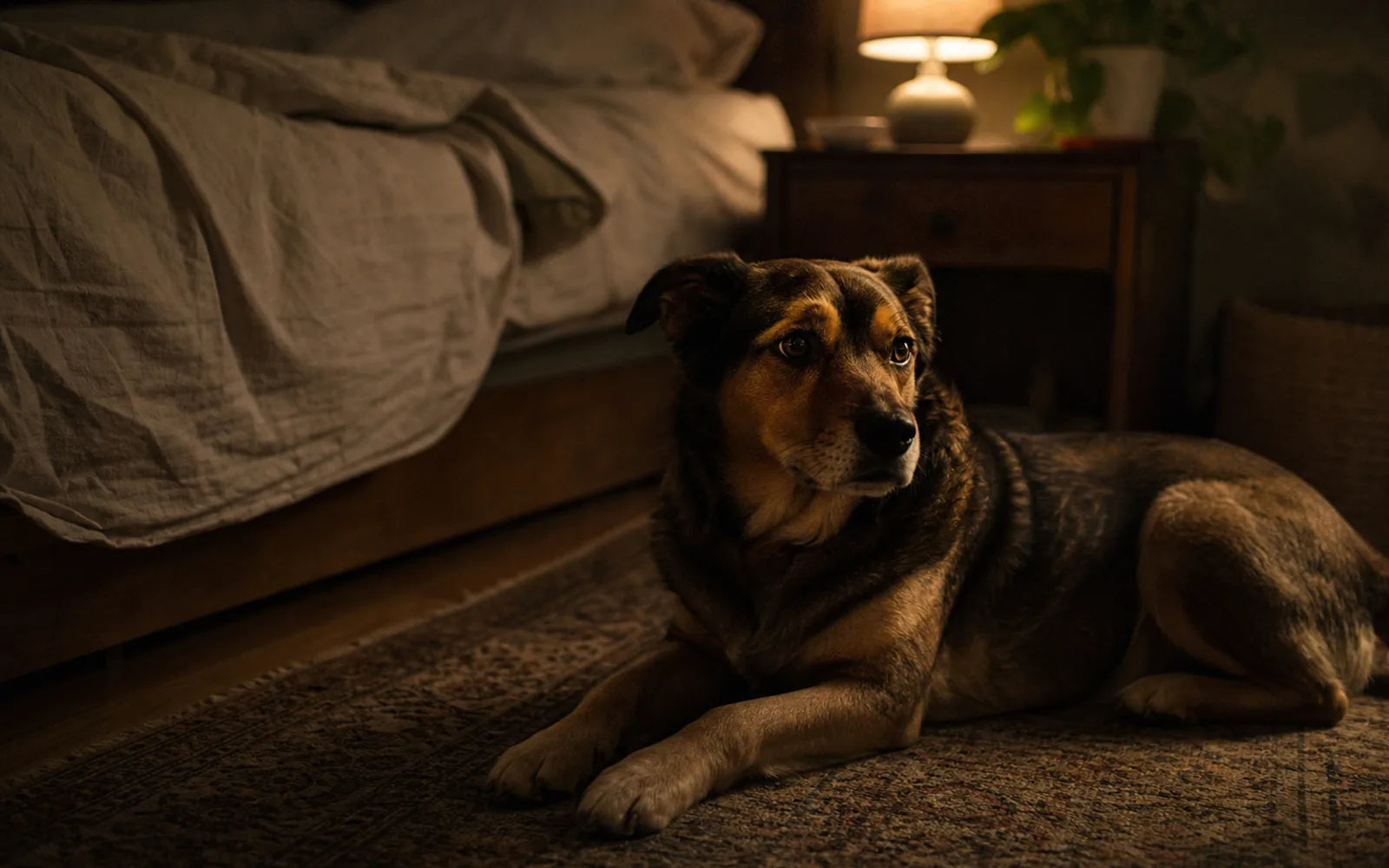
A dog that won’t settle at night is usually telling you one of four things: they feel anxious, their routine changed, they’re getting older, or they’re physically uncomfortable. The fix is rarely one thing — it’s a calm, predictable bedtime routine plus a secure, comfortable place to sleep. Below are the common causes and what actually helps.
First, is it anxiety or just restlessness?
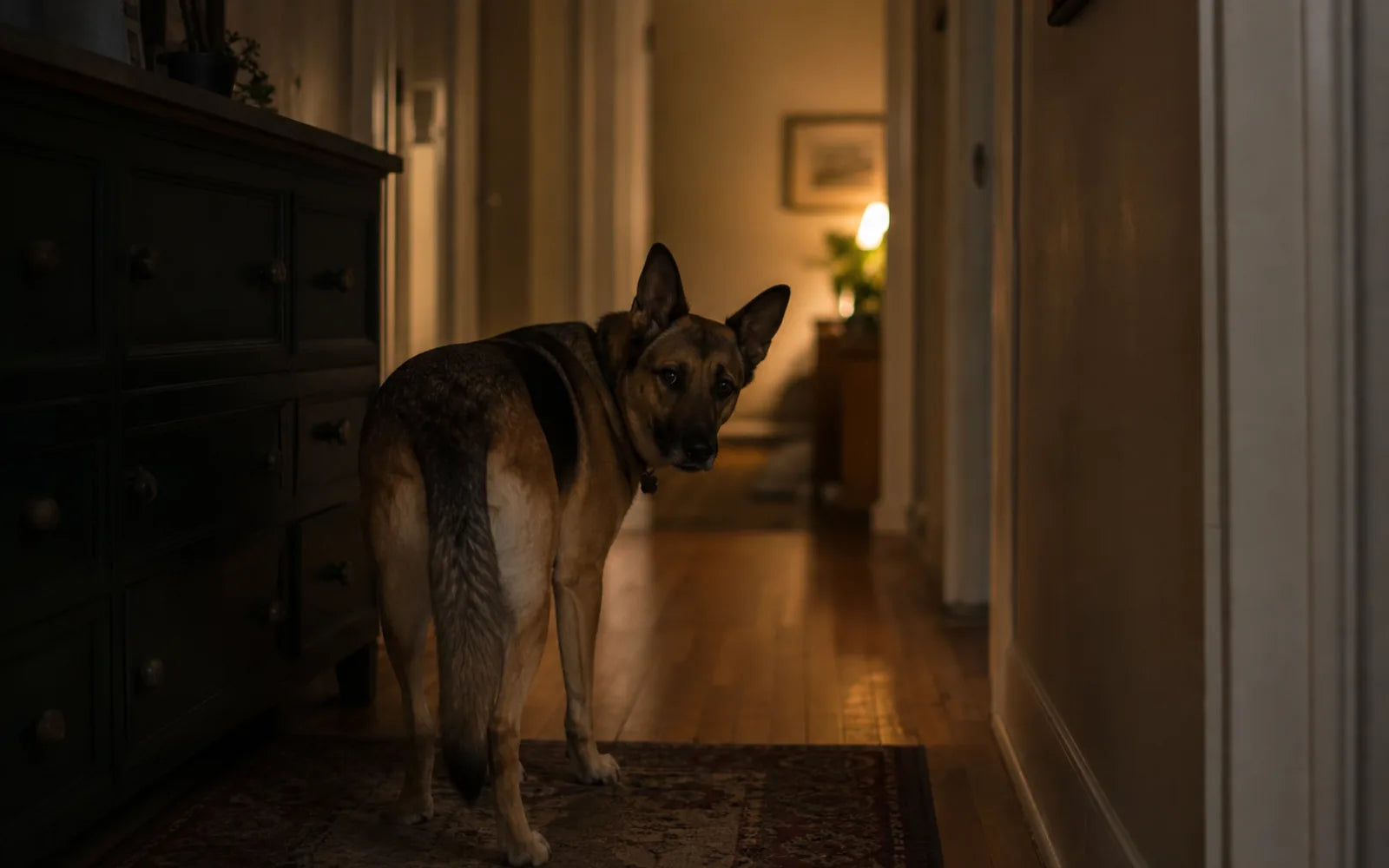
Occasional restlessness is normal. True night-time anxiety tends to show up as a pattern: pacing, whining or barking, trembling, excessive licking, difficulty lying down, or trying to hide. If it happens for more than a few nights in a row, it’s worth working through the causes below — and ruling out pain with your vet.
Common reasons dogs won’t settle
- Anxiety and separation. Many dogs wind down only when they feel secure and near their people. Rescue dogs and puppies are especially prone to this.
- A change in routine. A move, travel, a new baby, or even guests can unsettle a dog until things feel normal again.
- Age. Older dogs can develop canine cognitive dysfunction (a dementia-like condition) that disrupts the sleep–wake cycle and increases night-time anxiety.
- Distraction. Dogs are wired to investigate sounds — a fox outside or a noisy street can keep them up.
- Needing the toilet, or too much water before bed.
- Pain or illness. Sore joints make it hard to get comfortable. If you suspect pain, see your vet.
How to help your dog settle
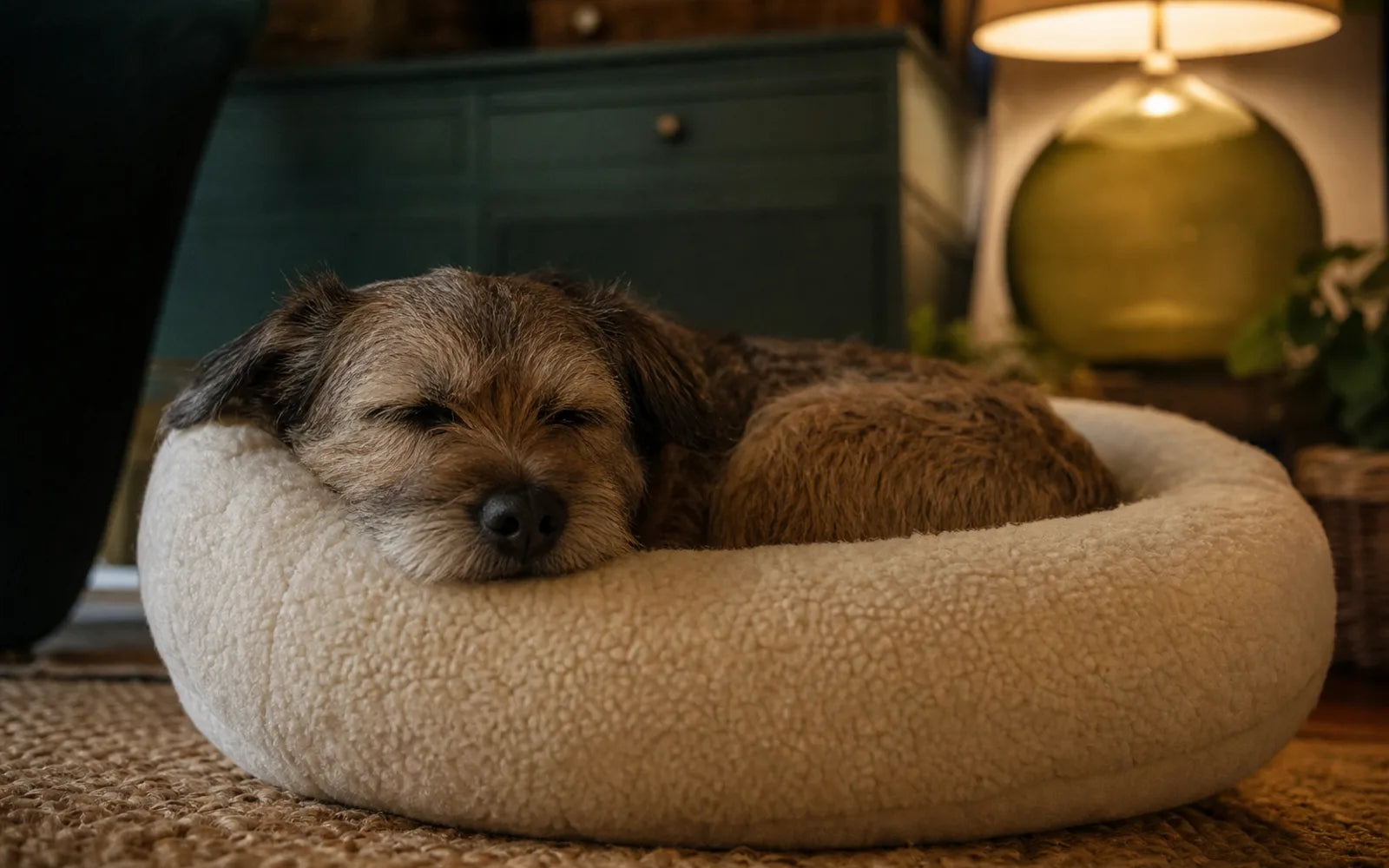
Start with a consistent bedtime routine — same potty trip, same wind-down, same spot every night. Give them a quiet, dark, comfortable place that’s theirs. This is where the right bed matters: an enclosed, soft bed with a raised bolster rim gives anxious dogs something to lean and curl against, which many find self-soothing. Our calming dog beds are built around that raised-rim design, and our anxiety-relief range covers lick mats, calming blankets, and pheromone diffusers that help during storms, travel, and time alone. White or pink noise can also drown out the sounds that make dogs want to investigate.
When to talk to your vet
If your dog is in pain, the anxiety is severe or getting worse, or your dog is a senior showing confusion and disorientation at night, book a check-up. A vet can rule out illness and, for older dogs, help with cognitive decline. Comfort products help a dog settle — they aren’t a substitute for veterinary care when something is medically wrong.
Shop the range
Frequently asked questions
Why does my dog get more anxious at night than during the day?
With fewer distractions at night, dogs have less to focus on, so daytime stress can surface. In older dogs, cognitive decline can also cause "sundowning" — increased anxiety as it gets dark.
Do calming dog beds actually help?
For many dogs, yes. The raised bolster rim gives them a secure edge to curl against and rest their head, recreating the enclosed, den-like feeling that helps anxious dogs relax. It won’t fix medical anxiety on its own, but it addresses the "I don’t feel safe here" part.
Where should my dog’s bed go?
A quiet, dark, low-traffic spot at a comfortable temperature. Keep it consistent — moving the bed around can undo the sense of security you’re trying to build.
How long until a new routine works?
Routine-based anxiety (a move, a new home) often eases within a couple of weeks as the dog adjusts. Deeper separation anxiety can take longer and may need training or veterinary support.