
How to Keep Your Dog Cool in Summer (Signs of Overheating + What Helps)

Dogs cool themselves mainly by panting, which is far less efficient than sweating — so in hot weather they can overheat quickly. Keeping your dog cool comes down to shade, fresh water, a cool surface to lie on, and avoiding the hottest part of the day. Here’s how to do it, and how to spot when heat has become an emergency.
Warning signs your dog is too hot
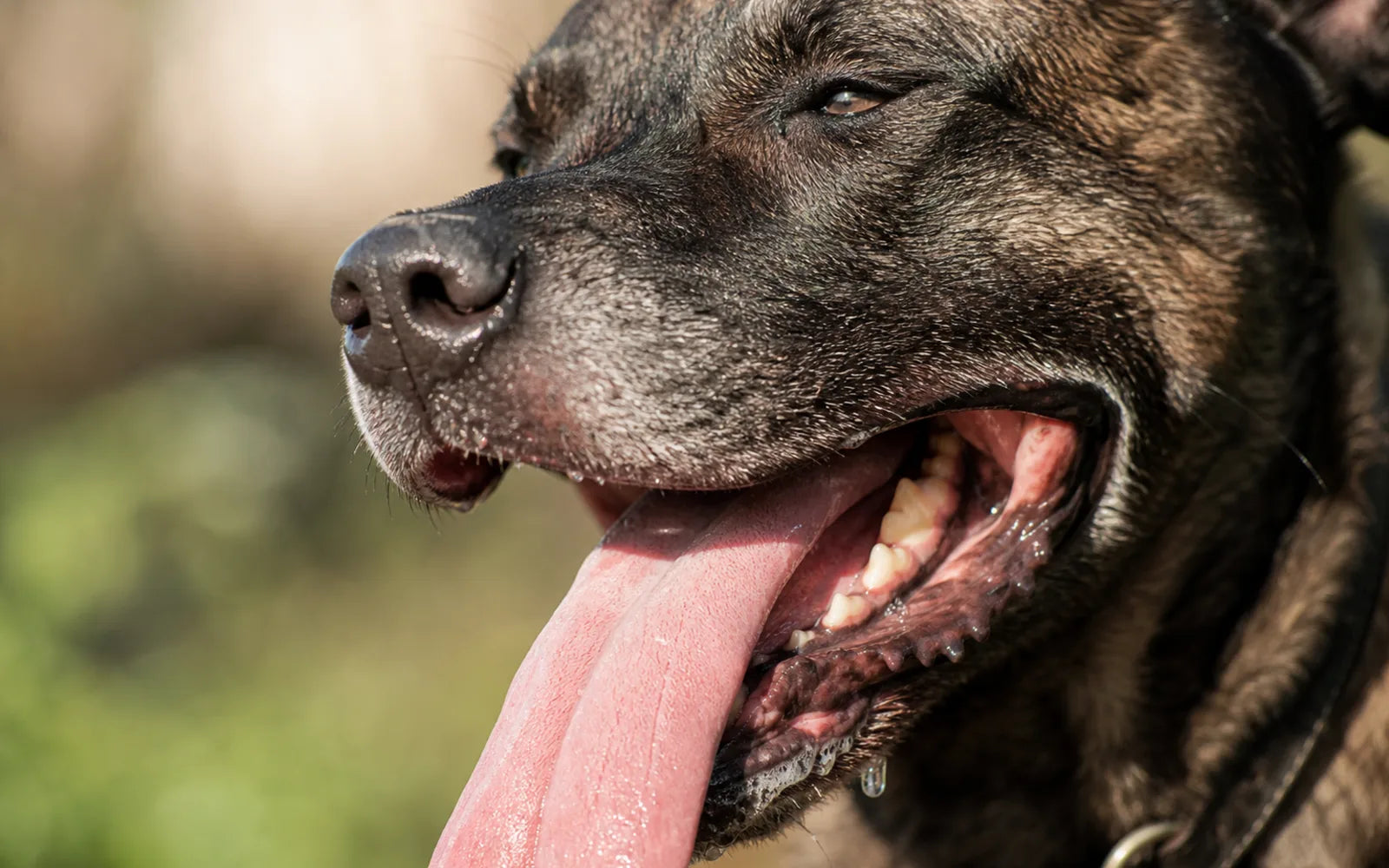
Watch for heavy or frantic panting, drooling, bright red gums, lethargy, wobbliness, or vomiting. These can signal heatstroke, which is a medical emergency — move your dog to shade, offer small amounts of water, wet them with cool (not ice-cold) water, and call your vet immediately.
Everyday ways to keep your dog cool

- Shade and airflow — always give an escape from direct sun.
- Fresh water everywhere, refreshed often.
- A cool surface to lie on. A self-cooling mat or bed pulls heat away without water or power, so restless dogs can settle instead of hunting for the tile floor. See our cooling dog beds and mats.
- Walk in the cool hours — early morning or late evening.
- Check the pavement. If it’s too hot for the back of your hand for five seconds, it’s too hot for paws.
How cooling mats and beds work
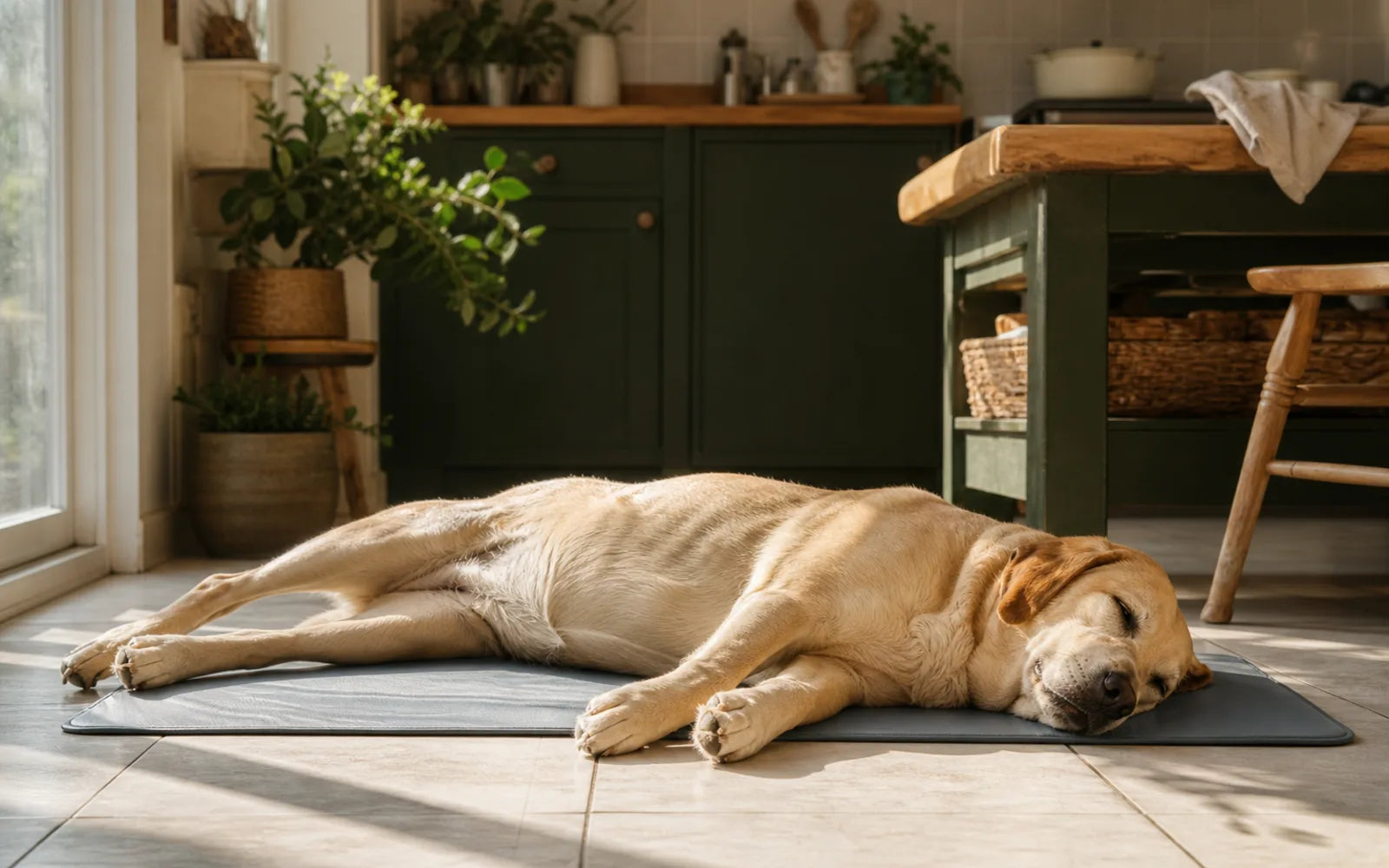
Most self-cooling mats use a pressure-activated gel, or a breathable, moisture-wicking fabric, that draws body heat away as your dog lies on it — no refrigeration or electricity needed. They’re a simple way to give an overheating-prone dog a comfortable spot indoors, in the car, or on the patio. Browse the full cooling range, or if you travel, our car and travel gear keeps dogs comfortable on the road.
Dogs that need extra care in heat
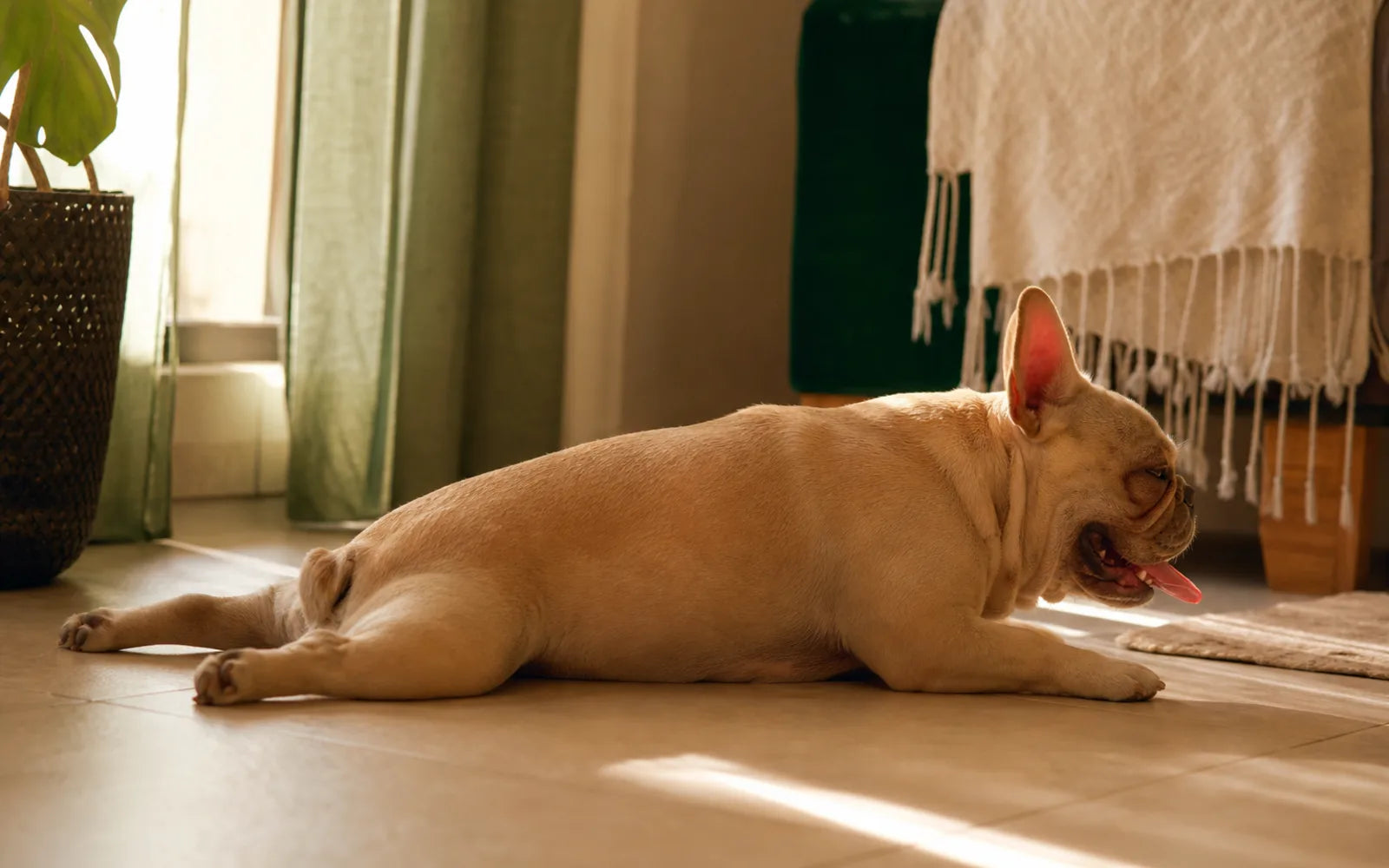
Flat-faced (brachycephalic) breeds, senior dogs, overweight dogs, and puppies are more vulnerable to heat. Never leave any dog in a parked car — interior temperatures climb dangerously fast even with windows cracked.
Shop the range
Frequently asked questions
Do cooling mats really work without water or electricity?
Yes. Gel mats are pressure-activated — your dog’s body weight and warmth activate the cooling gel — and fabric mats work by wicking heat and moisture away. Neither needs power or a freezer.
What temperature is too hot for a dog?
It depends on the dog, humidity, and activity, but caution starts around 25–29°C (77–84°F), and above that heat becomes risky — especially for flat-faced, senior, or overweight dogs.
How do I know if it’s heatstroke?
Frantic panting, drooling, bright red gums, weakness, confusion, or collapse. Cool your dog with (not ice-cold) water and contact your vet immediately — heatstroke can be fatal.
Can I put a cooling mat inside my dog’s crate or bed?
Yes — that’s a great use. Many owners lay a cooling mat on top of a regular bed in summer so the dog gets both support and a cool surface.