
Best Dog Bed for Senior Dogs with Joint Pain: What to Look For

If your older dog is slow to get up, hesitant on stairs, or shifts around trying to get comfortable, joint stiffness is often the reason. The single most helpful change at home is a proper orthopedic bed: dense memory foam that supports the joints instead of bottoming out on the floor. Here’s what to look for.
Signs your dog’s joints are bothering them
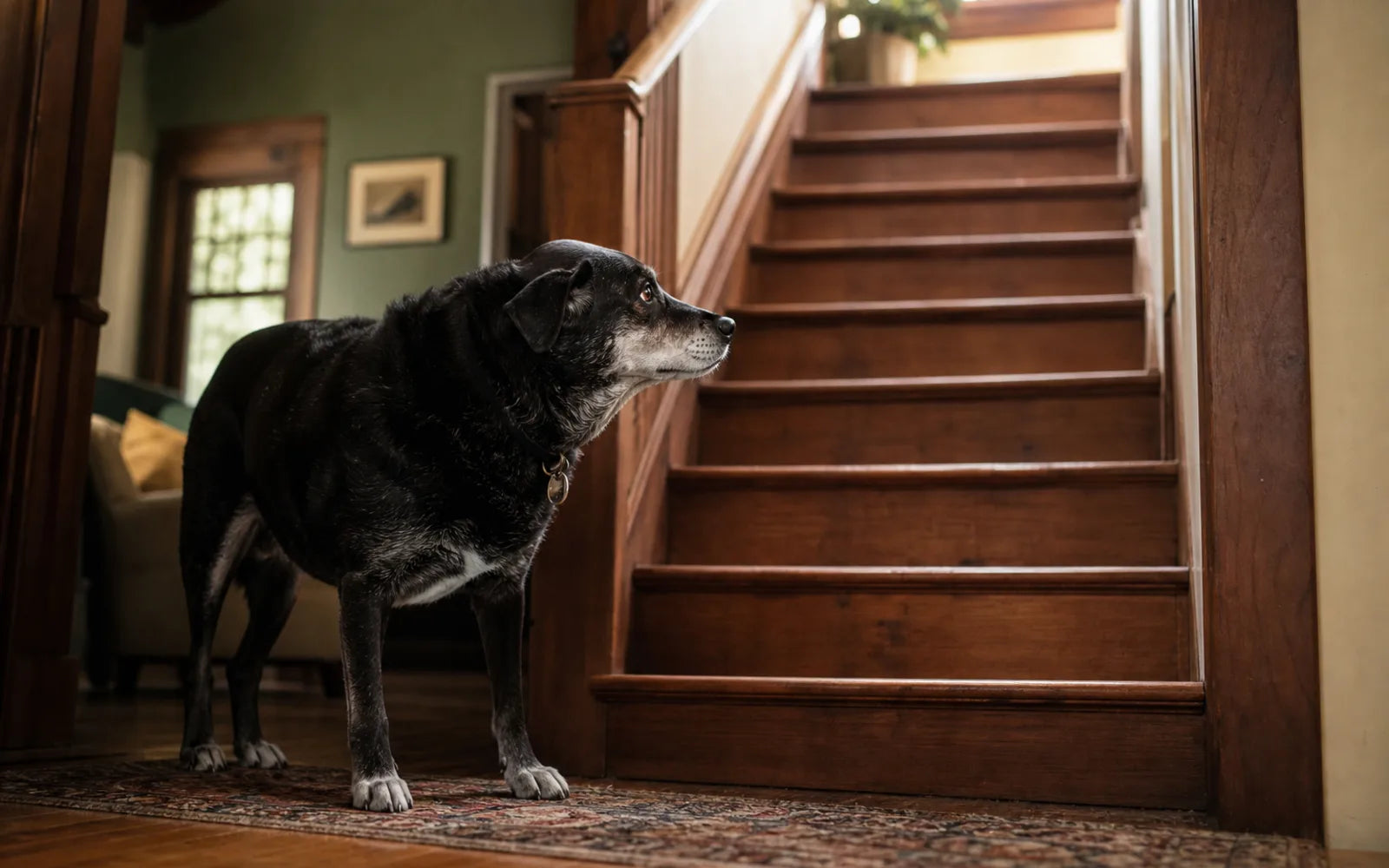
Common signs of joint pain or arthritis in older dogs include stiffness after resting, reluctance to jump or climb stairs, slowing down on walks, licking a joint, and trouble getting comfortable at night. If you notice these, a vet can confirm arthritis and discuss pain management — the right bed complements that, it doesn’t replace it.
What makes a good orthopedic bed
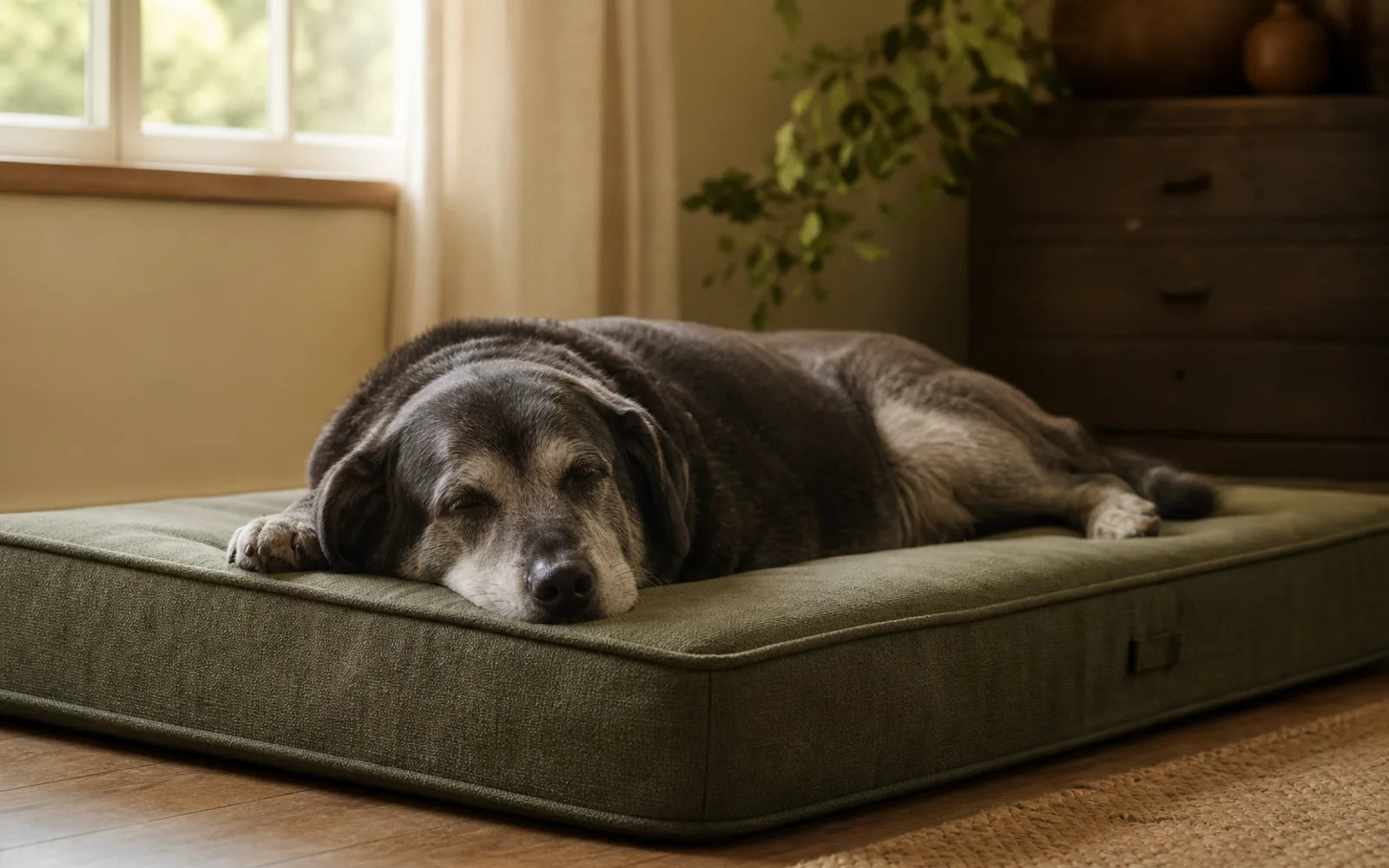
- Genuine memory foam with enough density to support your dog’s weight without compressing flat.
- Low or one-side entry so a stiff dog can step in easily.
- Bolstered edges for head and neck support (and a secure feeling).
- A washable, removable cover — senior dogs have more accidents, and clean bedding matters.
- The right size — big enough to lie fully stretched out.
Our orthopedic dog beds are built for exactly this — memory-foam support for senior and larger dogs. If your dog likes to lean and lounge, the bolstered sofa beds add extra edge support.
Other ways to help stiff joints at home

Keep your dog at a healthy weight, add gentle regular exercise, use rugs or runners on slippery floors, and keep them warm — cold makes stiff joints worse. Ramps can save older dogs from jumping onto sofas or into cars.
Shop the range
Frequently asked questions
What’s the difference between an orthopedic bed and a regular one?
An orthopedic bed uses dense memory foam that distributes weight and cushions the joints against the floor. A regular padded bed compresses under a heavier or older dog, offering far less joint support.
Is memory foam good for dogs with arthritis?
Yes — supportive memory foam relieves pressure on sore hips, elbows, and shoulders, which is why it’s the standard recommendation for arthritic and senior dogs. Pair it with veterinary pain management for the best result.
What size orthopedic bed should I get?
Big enough that your dog can lie fully stretched out, not just curled. Measure your dog nose-to-tail while lying down and add a few inches.
How do I keep an orthopedic bed clean?
Choose one with a removable, machine-washable cover and, ideally, a waterproof inner liner — senior dogs are more prone to accidents.